Description

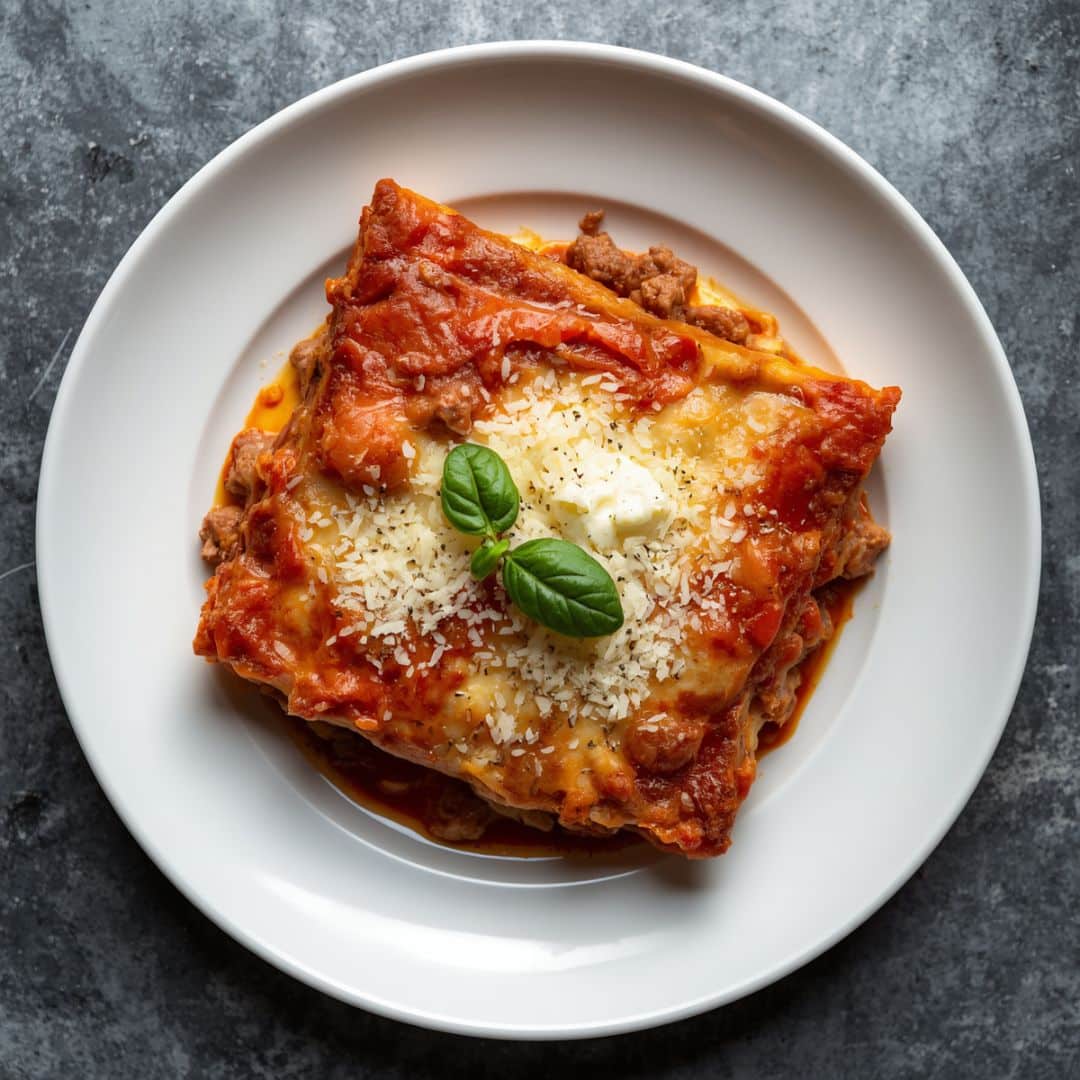
🍝🔥 Discover our homemade Lasagna al forno, made with delicious layers of tender pasta, topped with a savory tomato sauce, and finished with a golden cheese gratin. A comforting classic, perfect for a fun and indulgent meal! 🧀🍅
Ingredients
Ground beef (Switzerland), tomato, Grana Padano,mozzarella,flour,butter,cream, shallot, olive oil, salt, pepper, rosemary, bay leaf
Nutritional Information – Per 450-gram serving
| Energy, calories | 844 kcal |
| Proteins | 49.1 g |
| Carbohydrates, available | 47.4 g |
| Lipids | 49.7 g |
| Fatty acids, saturated | 25.5 g |
| Dietary Fiber | 4.8 g |
| Salt | 2.2 g |
Allergens
- Milk (and lactose)
- Gluten
Preparation
| ⏲️ 4 minutes in the microwave Our containers are microwave-safe |
🥘12 minutes in a conventional oven Transfer to a suitable baking dish |
🍳8 minutes in a frying pan Simply reheat in a frying pan |
Which portion should I choose?
Our meals are available in three sizes: 350 g, 450 g, and 600 g.
To help you find the right combination, here are a few examples:
- Normal appetite → 1 × 450 g
- Small appetite → 1 × 350 g
- 2 children → 1 × 600 g to share
- Exercise or a busy day → 1 × 600 g
👉 For a family of four, if you combine 1 x 450 + 1 x 350 + 1 x 600 to share, expect to pay about CHF 14.50 per person. No cooking required!
Give it a try and see what works best for you.
Nutritional Profile — Homemade Baked Lasagna
🥩 Ground beef — 120 g
Ground beef is the main source of protein in this dish, providing 25.9 g of protein per serving—nearly half of an adult’s daily requirement. It also contains 9 g of fat, including 3.84 g of saturated fat—a moderate amount for this dish, but one that should be considered in the context of other sources of animal fat (cream, cheese). That is why the recipe specifies trimming the fat from the meat before mixing it with the tomato sauce, which limits the final fat content. As a result, the beef remains a source of heme iron and zinc, two essential minerals that are often lacking in the diet.
🌾 Dry lasagna noodles — 125 g
At 125 g dry weight, the pasta is the dish’s primary source of energy (441 kcal) and provides most of its complex carbohydrates (88 g). When cooked, it swells to form a hearty, filling base. It also provides 15.75 g of plant-based protein and 6.38 g of fiber, contributing significantly to the dish’s total fiber content. However, like all white pasta, its glycemic index is moderate to high; its impact is mitigated, however, by the dish’s high fat and protein content.
🍅 Tomato sauce — 200 g
The passata provides the aromatic base and serves as the recipe’s vegetable component—200 g for just 138 kcal and 3.8 g of fiber. It is naturally rich in lycopene (not calculated here but well documented), an antioxidant whose bioavailability is increased by cooking.
🧀 Grana Padano — 20 g
With 79 kcal per 20 g, Grana Padano is the dish’s most energy-dense ingredient per gram. It provides 6.6 g of high-biological-value protein and 3.72 g of saturated fat, all concentrated in a small amount of cheese. Notably, it is also a significant source of calcium (~240 mg per 20 g, according to official Grana Padano data). However, its sodium content (0.34 g/20 g) adds to the other sources of sodium in the dish—yet another reason to measure it precisely.
🧀 Mozzarella — 15 g
Mozzarella provides the characteristic melt-in-your-mouth texture of lasagna au gratin—38 kcal and 2.93 g of protein per 15 g. Its saturated fat content (1.71 g) is moderate at this serving size. That’s why it plays a role primarily in flavor and texture: the golden crust on top is as visually appealing as it is technically useful for holding the layers together. Furthermore, its salt content (0.004 g/g) remains very low compared to hard cheeses.
Positioning: A traditional, well-rounded meal, rich in protein and complex carbohydrates.