Description

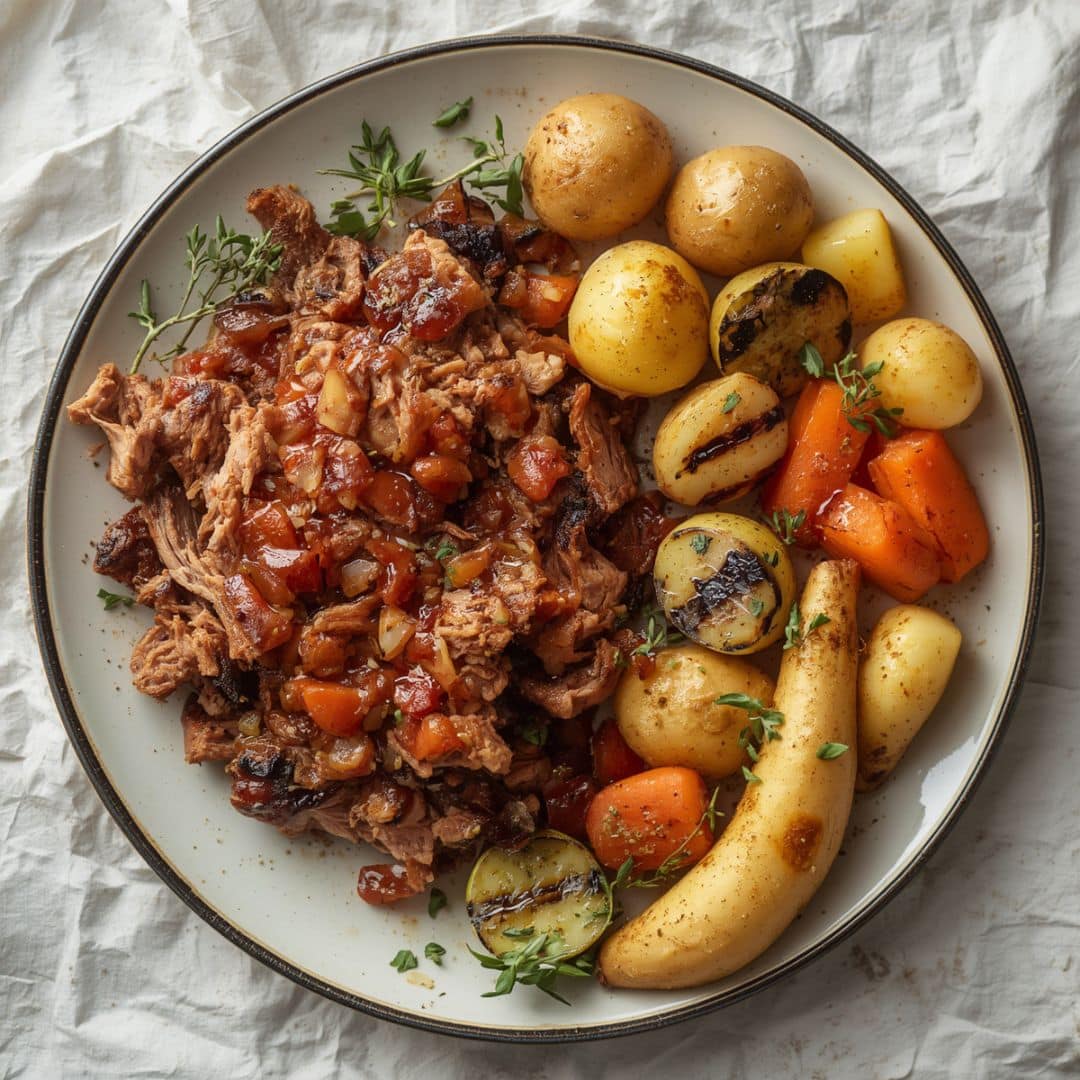
Pulled pork simmered for 10 hours, melt-in-your-mouth tender and flavored with a slightly sweet homemade BBQ sauce. Served with oven-roasted root vegetables—carrots, parsnips, and baby potatoes. 🍖🥕
High protein - 💪 Fit Meal
- 25 grams of protein minimum per serving and 680 calories maximum
Ingredients
Roasted pork shoulder (Swiss), carrots, baby potatoes, parsnips, diced tomatoes, onions, olive oil, maple syrup, applesauce, cider vinegar, brown sugar, Worcestershire sauce, salt, garlic powder, dried thyme, chili powder, smoked paprika, pepper
Nutritional information - Per serving of 450 grams
| Energy, calories | 626.9 kcal |
| Protein | 50.2 g |
| Carbohydrates, available | 47.3 g |
| Fats | 24.5 g |
| Fatty acids, saturated | 4.2 g |
| Dietary fibres | 7.7 g |
| Salt | 2.2 g |
Allergens
- Fish
- Gluten
Preparation
| ⏲️ 4 minutes in the microwave Our trays are compatible with |
🥘12 minutes in a conventional oven Transfer to a suitable dish |
🍳8minutes in a frying pan Simply reheat in the pan |
Which portion should I choose?
Our meals are available in three sizes: 350 g, 450 g, and 600 g.
To help you find the right combination, here are a few examples:
- Normal appetite → 1 × 450 g
- Small appetite → 1 × 350 g
- 2 children → 1 × 600 g to share
- Exercise or busy day → 1 × 600 g
👉 For a family of four, combining 1 x 450 + 1 x 350 + 1 x 600 to share, expect to pay about CHF 14.50 per person. No cooking required!
Give it a try and see what works best for you.
Nutritional Profile – Pulled BBQ Pork (cooked for 10 hours) and Grilled Quebec Vegetables – 💪
🐖 Roasted pork shoulder — 140g
The pulled pork is the main source of satiety in this dish, thanks to its melt-in-your-mouth texture and high protein content. This serving provides 45.5g of protein, which accounts for the bulk of the meal’s protein intake. Furthermore, slow cooking without added fat limits the fat content to 14.3g per serving. This is why this dish naturally stands out as a source of high-quality protein.
🥔 Baby potatoes — 100g
Potatoes add a soft texture and provide an energy-rich carbohydrate base to the dish. This serving contains 15.6 g of carbohydrates and 2.1 g of fiber. However, their low fat content (0.1 g) makes them a low-calorie starch compared to other side dishes. Furthermore, baking them without excess fat preserves this light nutritional profile.
🥕 Carrots — 105g
Roasted carrots add crunch, natural sweetness, and color to the plate. Notably, this serving contains 2.73 g of fiber, which helps promote digestive balance in the meal. Furthermore, their natural sugar content accounts for part of the dish’s sweet-and-salty flavor. As such, they contribute to the recipe’s variety of vegetables.
🥕 Parsnips — 100g
Parsnips round out the trio of root vegetables with a more pronounced, slightly sweet flavor. This serving provides 12.1 g of carbohydrates and 2.1 g of fiber. However, its calorie density remains moderate (62 kcal/100 g). That’s why it works well in a dish featuring seasonal vegetables.
🫒 Olive oil — 10.25 g
Olive oil acts as a binder to coat the vegetables before roasting and helps bring out their flavors. It is the main source of added fat in the dish, providing 9.2 g per serving. Furthermore, its fatty acid profile consists mainly of unsaturated fatty acids. As a result, it contributes to the texture without significantly increasing the saturated fat content.
🍯 Honey — 8.75 g
Honey adds a touch of sweetness that caramelizes the vegetables as they cook. It contains 6.65 grams of carbohydrates per serving, making it one of the main contributors to the dish’s sweet flavor. Furthermore, using it in small amounts limits its overall caloric impact. That is why it remains a supplementary ingredient rather than a significant source of energy.
🍅 Diced tomatoes — 16.25g
Tomatoes add acidity and depth to the BBQ sauce that coats the meat. They contribute 0.49 g of carbohydrates and 0.16 g of fiber per serving. However, their small quantity in the recipe limits their overall nutritional impact. As a result, their role is primarily to add flavor.
🧅 Chopped onion — 12.5g
Chopped onion serves as the aromatic base of the BBQ sauce, adding a mild flavor after slow cooking. It provides 0.88 g of carbohydrates per serving. Furthermore, its modest amount makes it a background ingredient rather than a major nutritional contributor. That is why its role is primarily one of flavor.
Nutritional Profile: A dish high in protein (43 g per serving), moderate in fat, with sodium (soy sauce) and simple sugars (honey and orange juice) to watch out for. Good protein profile for a complete meal.