Description


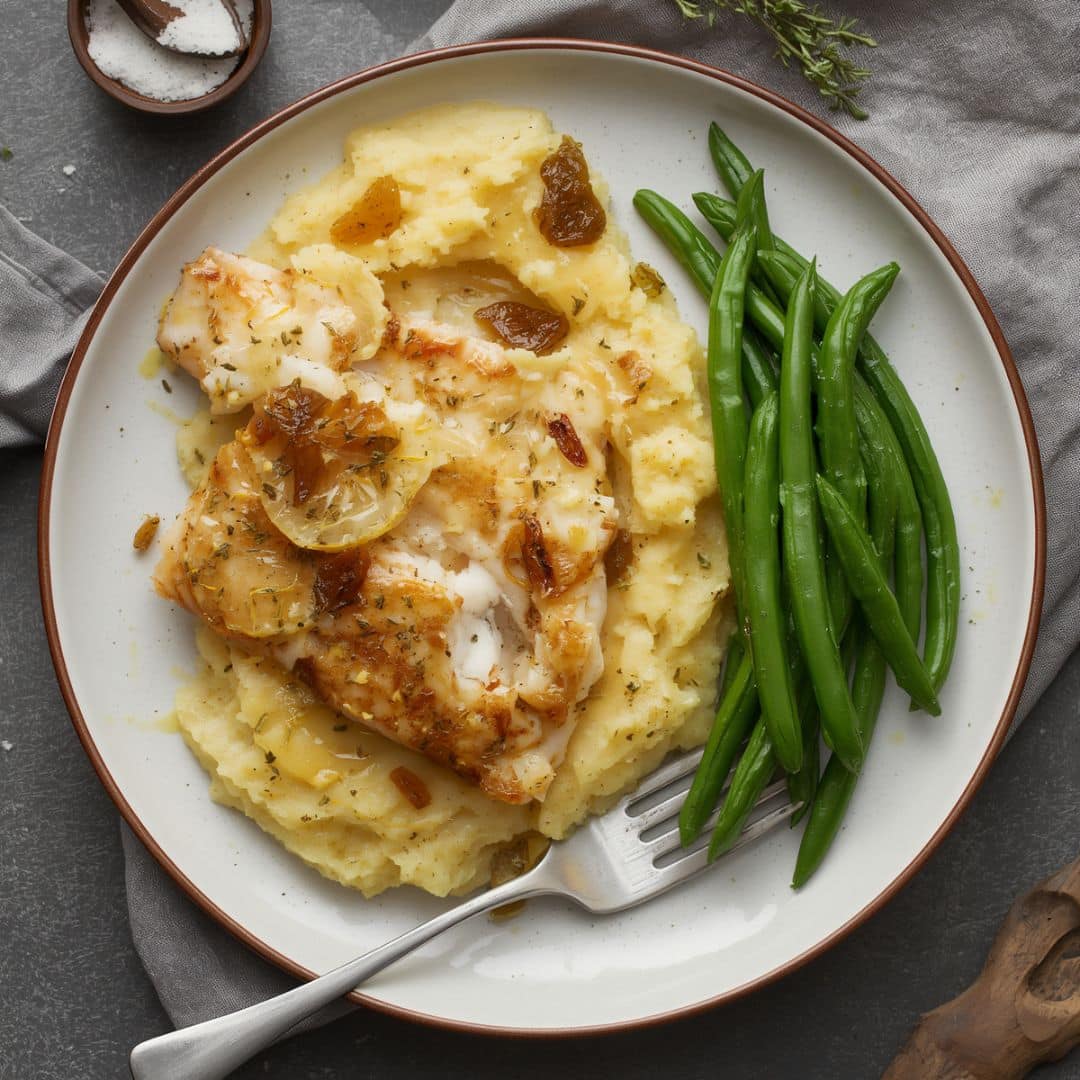
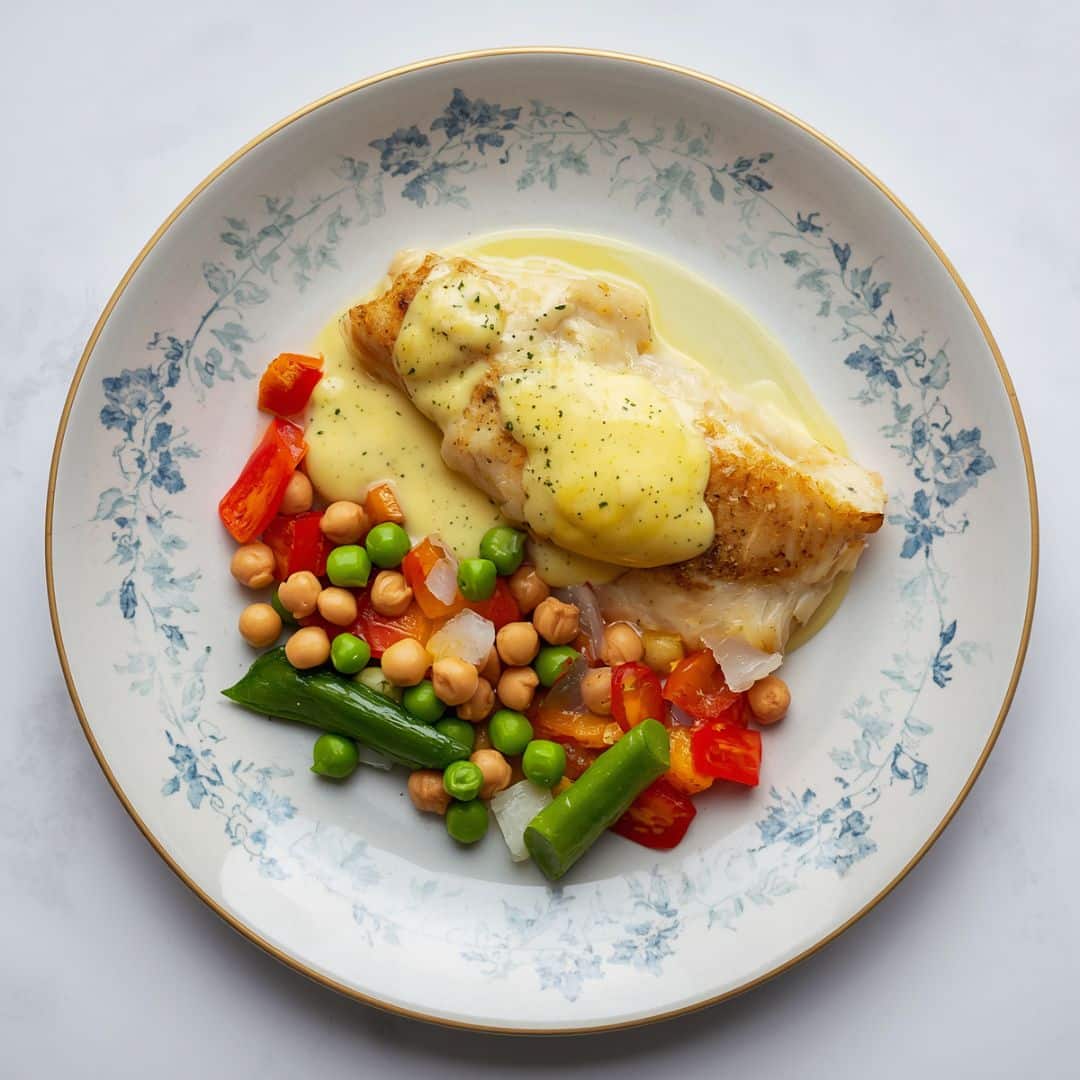
Cod fillet, topped with an authentic chive-flavored hollandaise sauce, served with organic long-grain rice and crisp vegetables (bell pepper, snow peas, chickpeas). 🐟✨
Ingredients
Cod, butter, snow peas, red bell pepper, organic long-grain rice, chickpeas, egg yolk, water, lightly salted butter, lemon juice, chives, olive oil, salt, pepper
Nutritional Information – Per 450-gram serving
| Energy, calories | 967.5 kcal |
| Proteins | 37.5 g |
| Carbohydrates, available | 51.5 g |
| Lipids | 66.3 g |
| Fatty acids, saturated | 36.4 g |
| Dietary Fiber | 7.4g |
| Salt | 2 g |
Allergens
- Milk (and lactose)
- Fish
- Egg
Preparation
| ⏲️ 4 minutes in the microwave Our containers are microwave-safe |
🥘12 minutes in a conventional oven Transfer to a suitable baking dish |
🍳8 minutes in a frying pan Simply reheat in a frying pan |
Which portion should I choose?
Our meals are available in three sizes: 350 g, 450 g, and 600 g.
To help you find the right combination, here are a few examples:
- Normal appetite → 1 × 450 g
- Small appetite → 1 × 350 g
- 2 children → 1 × 600 g to share
- Exercise or a busy day → 1 × 600 g
👉 For a family of four, if you combine 1 x 450 + 1 x 350 + 1 x 600 to share, expect to pay about CHF 14.50 per person. No cooking required!
Give it a try and see what works best for you.
Nutritional Profile – Cod Fillet with Hollandaise Sauce and Sautéed Vegetables
🐟 Cod — 150g
Cod is the main source of protein in this dish and is what makes it so filling. It provides about 17 grams of protein per 100 grams when cooked, with a very low fat content (less than 1 gram per 100 grams). It is therefore a lean white fish, which contrasts with the richness of the sauce that accompanies it.
🧈 Butter (unsalted + lightly salted) — 70g
Butter is the key ingredient in hollandaise sauce and is also used to cook the fish. It contains most of the dish’s fat, a significant portion of which is saturated fat. That is why it is the limiting factor in this recipe’s nutritional profile—so enjoy it as a treat, as part of an otherwise balanced diet.
🥚 Egg yolk — 13.5 g
Egg yolk acts as a natural emulsifier to thicken the hollandaise sauce. It provides about 16 g of protein and 31 g of fat per 100 g, which—even in the small amount used here—contributes to the sauce’s richness. Its role in this dish is primarily technical rather than nutritional.
🍚 Organic long-grain rice — 44 g (dry)
Rice provides the starchy base and energy for the meal. With about 78 grams of carbohydrates per 100 grams (dry weight), it is the dish’s main source of carbohydrates. It is simply cooked in water, without any added fat.
🫑 Red bell pepper — 47.5 g
Bell peppers add color, crunch, and a fresh, vegetable-like flavor to the dish. They are low in calories (about 32 kcal per 100 g when raw) and a good source of vitamin C. They thus contribute to the vegetable component of the meal.
🌱 Sweet Peas — 60g
Snow peas add volume and crunch, while remaining low in calories. They contain about 3 grams of fiber per 100 grams when steamed, making them one of the dish’s sources of fiber. They also help lighten the overall profile of the dish.
🫘 Chickpeas — 40 g (cooked, drained)
Chickpeas add crunch and a denser texture to the filling. They provide about 7 grams of protein and 6 grams of fiber per 100 grams cooked, making them a good source of plant-based protein. However, their calorie content remains moderate.
🍋 Lemon juice — 5 g
Lemon juice is used solely to balance the acidity of the hollandaise sauce. Given the small amount used, its nutritional value (particularly vitamin C) is negligible in this context. Its role is primarily to add flavor.